понедельник, 3 сентября 2018 г.

Conversations with Sri Sathya Sai on Princess Diana and His Visit to Badrinath


September 1, 1997

Swami  : (About to say something to a teacher, then withdraws) Chhodo (leave it). Again after a moment, Tumhara system Kharab Hai (there is a defect in your system). Boys Ko exam Ke Baad Thoda Time Do (after exams give some time to boys). Ekdam classes Shuru Karta Hai (You start the classes immediately). Half an hour time Do. Boys Ko discuss Karna Hai, question paper Mein Kya Aaya Hai (Boys need to discuss about the question paper). Main Professor Hota To Aisa Nahi Karta,  Nahi, Nahi (If I would have been the Professor, I would have never done like that). Principal Ko Bolo. (Repeating again) Main Aisa Nahi Karta. Boys Ko time Do exam Ke Baad. Ekdam class Mein boys Kuch Nahi Sunta, Tum Kuchh Bhi Bolo 

(Immediately after the exam, boys don't listen to anything in the class, whatever you may teach). 

Boy  : Swami, sister (had an) accident. 

Swami  : What? (The boy repeated and Swami repeated ‘What?’) 

Princess Diana (1961-1997)
Swami  : Ha! Tumhara Ek Aur sister Ka Accident Hua. Malum second sister, Queen Elizabeth Ka daughter-in-law. What is her name? (Another sister of yours also had an accident. Do you know who is the second sister? She is the daughter-in-law of Queen Elizabeth) 

Another boy: Swami, Diana. 

Swami  : Ha! 

Boy  : (Repeating again) Swami, Diana. 

Swami  : (Punning on the words - Jokingly) Ha! Dionil, Medicine for Diabetes? 

(Swami repeated the name of the medicine to that teacher, and the teacher agreed with Swami.) 

Student  : Swami, sister and brother-in-law Aaya (Sister and brother-in-law have come). (Swami created Vibhuti for the student.) Swami, please talk to them. 

Swami  : Recommendation Kyun (Why do you need to give recommendation?)! Relation with Swami is heart-to-heart, love-to-love, no recommendation.  

Swami pointed to a student and told that his grandfather had come for the first time to the old Mandir. “Ye construction Nahi Hua Tha.” (The present Mandir was not constructed) (To that student) Abhi Kahaan Hai? (Where is he now?). 

Student  : Swami, Kasauli. 

Swami  : Ha? 

Student  :  Swami, Kasauli. Himachal Pradesh. 

Swami  : Malum Hai? (Do you know?) Shimla Gaya, Badrinath Bhi Gaya. 25 miles up walk Kiya. Abhi Bhi Walk Kar Sakta Hai Par Jagah Nahi Hai. Rishikesh Bhi Gaya. (I have gone to Shimla and Badrinath. I walked up the hill. Now also I can walk, but no place. I have gone to Rishikesh also.) 

Teacher  : Swami, Upar horse Bhi Jata Hai. (Horse also goes up). 
Sri Sathya Sai en route to Badrinath with Burgula Ramakrishna Rao, Governor of Uttar Pradesh
Swami  : Nahi. Vahan horse Nahi Hota. (There are no horses there.) Big donkeys. Donkeys Bhi Nahi, horse Bhi Nahi, Usko Kya Bolta Hai? (It’s neither a horse nor a donkey, what do you call it?). (To students) What is it called? 

Student  : Swami, mule. 

Swami  : Nahi,Nahi. 

Student  : Swami, pony. 

Swami  : No pony, no Puri. Kuch Aur Bolta Hai. (They call it something else) Unko Thoda opium Deta Hai. (They give it some opium). 
(Swami then imitated the addicted state of the animal. In the course of the conversation, Swami said) Marriage is mirage. Paani Dikhta Hai, Sukh-Sukh-Sukh Ke Liye Jata Hai, Par till last moment no Sukh (It is all illusory, man goes in search of happiness, but till last moment, no happiness). (To a student) What are you studying? 

Student  : MFM. 

Swami  : What is MFM? What is the meaning of finance? 

Student  : Swami, money. 

Swami  : What is the meaning of money? 

Student  : Swami, Maya. 

Swami  : Maya! Maya Hai To Usko touch Mat Karo. (If it is illusory, do not touch it). Everything is wealth. Health is wealth. Happiness is wealth. Thinking is wealth. Everything is wealth. But no use of wealth without discrimination - Medha Shakti. 

Student  : Swami, mind power. 

Swami  : Yes, brain power. What do you mean by ‘Free Will’? 

Student  : Swami, only Your will is Free Will. 

Swami  : Yes, nobody has Free Will, only God has Free Will, only God. No doubt, never doubt, only God has Free Will. 

Саи Рам

Отправлено с iPad

How to cultivate Friendship with God?


Sri Sathya Sai in the Brindavan Campus Hostel
Sneha is the eighth of nine stages of Bhakti (devotion) described in the Bhagavata and other texts. It is usually translated as 'friendship', a term that has been understandably vulgarized by application to certain transitory relationships between living beings. Friends come together as a result of a variety of reasons and circumstances which are mostly of worldly and temporary interest. People who have ample resources gain friends quickly, as do also those who have a great deal of patronage in their hands or can distribute favours. Those in authority also gather friends, who, of course, stay on during fair weather but disappear when the authority fades. Most friendships are based on selfish considerations and last only as long as selfish interests are promoted thereby. As the proverb goes, When the lake is full there are also frogs in plenty, but when it runs dry not a single croak is heard."

Friendship ought to be a spiritual bond, a heart to heart kinship based on full understanding of and pure dedication of one to another. Students should be vigilant against false and fleeting friendships and not be simply led away by hellos and handshakes. Do not cultivate close friendship with anybody unless you know that the motives on the other side are pure, unselfish and spiritual.

Unique friendship between Krishna and Arjuna

Genuine friendship can only be possible between one Atma and another, that is to say, between two persons who have each realized that Atma is the core of their being. Nowhere on the mundane plane can you get the genuine Sneha which is declared as the penultimate stage to Sharanagati or Atma Nivedana (total surrender and dedication to God), among the trivial, transitory friendships of worldlings.
Arjuna and Krishna had this genuine Sneha between them. Arjuna saw Krishna as his Sakha (friend), and therefore had the temerity to use words of jesting irreverence during 'play, or while in repose, or when seated by him, or at meals' (Vihaara Shayyaasana Bhojaneshu). The two often ate meals from the same plate, and were ready to help each other under all circumstances. Do not be under the impression that Arjuna was insidiously overpowered by Krishna. He was mature in character, well-versed in the Vedic lore and a redoubtable warrior and bowman full of courage and heroism. Krishna was the Purushottama (Supreme Being), Arjuna the Narottama (best human). It was a friendship between the Embodiment of the Highest and the embodiment of the best. Krishna was the Avataric (incarnated) Person; Arjuna was the Anandic (blissful) person; it was a coming together of the Avatara Murti and the Ananda Murti. Arjuna was often addressed by Krishna as Kuru Nandana. This name has a deep significance. Kuru means ‘act, activity, karma’. Nandana means ‘happy, delighted’. Kuru Nandana, therefore, means he who is delighted while engaged in activity. Throughout the eighteen chapters of the Geetha, Arjuna is alert and active, participating vigilantly in every turn of argument.

Krishna's assurance to all who offer their self

Ramakrishna Paramahamsa was fascinated by the Sneha that was exemplified by the Krishna- Arjuna relationship. He learned from the Bhagavata and the Bhagavad Geeta how the Sadhaka (spiritual aspirant) can go through all the nine stages of Bhakti (devotion). He was also determined to emulate the Gopis (cowherd girls) and earn for himself the Viraha (passionate) type of Bhakti, Madhura Bhakti (sweet devotion), that the Gopis had. When he read the Ramayana, he decided to emulate Hanuman and practise his Dasa Bhakti (devotion of servitude). Of all the Shlokas (verses) in the Bhagavad Geeta, Ramakrishna was especially impressed by the one that emphasised the attitude of Atma Nivedana or Sharanagati.

One day, while Ramakrishna was going to Kamarpukur, night overtook him and he was caught in heavy rain right in the centre of a burial ground. Of course he was in such an ecstatic mood that the time, place or weather mattered little to him. When he awoke, Ramakrishna called upon God by various names - Rama, Shiva, Krishna, Kaali, Hanuman. Then he suddenly realised that the names all referred to the One, and he repeated within himself the verse from the Geetha that reminded him of Sharanagati (absolute surrender) to the One.

Surrender absolutely to God to get peace

Many interesting incidents took place at Dakshineshwar. When Ramakrishna was once asked to go to the temple office to receive his monthly salary, he was very much upset, for he never wanted any wages for being given the chance of worshipping His Mother. At another time, thieves broke into the Krishna temple. When Ramakrishna and Mathuranath came by there and discovered that Krishna's idol was absolutely bare and that every jewel had been stolen, Mathuranath fell into a rage and began blaming Krishna Himself. "You are adored as the Guardian of the 'fourteen worlds,' but you cannot guard even the jewels on your own body," he said. Ramakrishna reprimanded him soundly for this sacrilege, saying, "Krishna has Lakshmi as His Consort, and for Him your gold and gems are as cheap as dust. As a matter of fact, what is gold but dust in another form?" He made Mathuranath repent for his silly outburst, making him aware of the true nature of God-head.

If only you surrender your wish and will, your fancies and fantasies to God, He will lead you aright and give you peace and joy. You must not run after diverse ends and flitting pleasures. Leave everything to God; accept whatever happens, as His Will. Ambareesha was a King who stuck to all the Vedic injunctions and observed all the rites and rituals laid down in these texts. He was noble, sincere and very devoted to Vishnu, the Form that embodies the fostering and sustaining aspect of God.

True devotion of King Ambareesha

Fasting on Ekadashi day and breaking the fast as-soon as Dwaadashi came in, was one of the important rites that Ambareesha observed meticulously every fortnight. Ekadashi is the eleventh day of the Moon and Dwaadashi, the twelfth day. The fast has to be broken with prayers to Vishnu and the partaking of the offering made to Him as soon as, according to the lunar calendar, the twelfth lunar day has started. On one occasion, a few hours before the approach of Dwaadashi, the great sage Durvasa, reputed for his frequent fits of fury and burst of uncontrollable temper, arrived at the palace of Ambareesha. He was heartily welcomed by the King. Ambareesha pleaded with him to proceed to the Ganges, finish his ablutions and return in time for the breaking of the Ekadashi fast. But the sage took his own time and was nowhere evident when the crucial moment arrived.

Ambareesha was in a fix. He consulted his preceptor who advised him to sip a few drops of sanctified water, since that could be considered breaking of the fast. On Ekadashi day, even water is taboo during the period of fasting. He said that Durvasa had no reason to get angry, since the drops of water were taken by him only as a token to keep the vow. But when the sage came and learnt about it all, he became so wild that he cursed Ambareesha for having broken the fast in his absence and started the meal. As the curse took form, the Chakra (discus) of Vishnu appeared on the scene and confronted Durvasa.

A devotee takes the curse as a gift from God

Ambareesha took the curse as a gift from God; he submitted himself to it in the spirit of a Sharanagati, for he had no will of his own. Thus, God came to his rescue. Ambareesha did not call upon Vishnu and pray that he may be saved from. the anger of Durvasa. He accepted that too as the Will of Vishnu. The Chakra pursued the terrified sage over all the three worlds, and when Durvasa fell at the feet of Vishnu, He directed him to approach Ambareesha himself to pardon. The attitude of surrender or Atma Nivedana (offering the self to God) makes a person dedicate his entire personality at the Feet of the Lord.
In the Ramayana, too, we have an episode that illustrates this. Rama and Lakshmana were combing the forests to discover where Seeta was. They were tired and thirsty. Suddenly, they came upon a clear pool and, while placing their bows on the ground, dropped their arrows which partially sank into the wet bank. After slaking their thirst, they put the bows on their shoulders and pulled the arrows out from the bank. Rama noticed a stain of blood at the tip of his arrow and was curious to find out how it came there. Lakshmana discovered a little frog that had been hit by Rama's arrow when he dropped it on the ground.

Rama told the wounded frog, "Poor thing! Why did you not cry out when you were hit?" The frog replied, "Whenever in trouble, I cry out to you Rama. But, when Rama Himself inflicts pain, whom am I to cry out to? I accepted it as His Grace." Bheeshma adored Krishna even when He was rushing towards him with His Chakra to take his life. His sense of Sharanagati (total surrender to Divinity) did not desert him at the point of death at the hands of the very Person whom he revered as God: "Kill me or save me, I shall not falter in my loyalty," he said.

See God in every being, Sneha will blossom
Ramakrishna had the same sense of total dedication. He was in great pain as the result of a cancer, and his disciples asked him to pray to the Mother for alleviation of the pain. Vivekananda was desperate when his master refused to ask this little favour from the Mother with whom he was literally on speaking terms. But Ramakrishna replied that if it was the Mother's Will that he must suffer, he was not going to pray for palliatives. But his disciples were adamant. They bothered Ramakrishna so much that one day he prayed to the Mother that he may be helped to take a little food in spite of the cancer in his throat. Ramakrishna told his disciples that at that time he heard the Mother admonishing him for his ignorance: “Are you not eating through all these billion throats? Why regret that one throat is incapable of taking down food?" (Vaasudevassarvaamidam). This truth was brought home to the disciples by this revelation.

The Sneha (friendship) stage of Arjuna is the stage when all distinctions between the devotee and God disappear and the two friends are One. When this stage of utter trust, unshakeable faith, and complete absence of doubt, fear and anxiety is reached, the next stage of Atma Nivedan is natural and easy to cover. This is real friendship to which the youth must aspire. See God in every being and then true Sneha will blossom, This type of true Sneha can come only when you follow the advice of Krishna. ‘He who has no trace of hatred towards any creature, who is friendly and compassionate towards all, who is free from the bondage of 'I' and 'mine,' who takes pain and pleasure as equally welcome and who is forbearing in spite of provocation...’

Develop these qualities in you, for they are the signs of true Sneha, for it is only when you are proceeding on the Godward journey along the nine stages of Bhakti (devotion) that you can attain this Divine ideal of true friendship.

Source: Divine Discourse on August 20, 1978 at the Sri Sathya Sai Hostel, Brindavan 
Саи Рам

From Mountain Top to Board Room - By Dr. Jack Hawley

From Mountain Top to Board Room - By Dr. Jack Hawley

“To transform the world there is no need for a new social system. What is essential is a group of men and women with social ideals. But such persons can survive only in a society [a culture] where there is purity of mind and good character. For those two qualities to flourish the basis is spirituality.”
— Sathya Sai Baba

It’s a long way, spiritually and morally, from the Avatar’s mountain top in Southern India to an executive board room in Southern California. Or perhaps it is not so far.

The motor trip to Kodaikanal lifts us from the stifling, searing heat of the plains first through rolling foothills. The world outside the car windows gradually transforms from dusty, dry browns to green. Then the road narrows and becomes a winding mountain road climbing steeply through dense forests. Arriving finally at the top, hours later, we first notice the fresh cool air washing this little resort community.

At daybreak in the quiet, almost chilly morning air, Baba’s devotees from all over the world stream out from their guest houses in all parts of this small town, towards Baba’s residence for Darshan. Even the mist rising from the cool mountain lake seems to move silently toward the driveway of Bhagavan’s bungalow, as though joining the people to catch a glimpse of the Avatar.
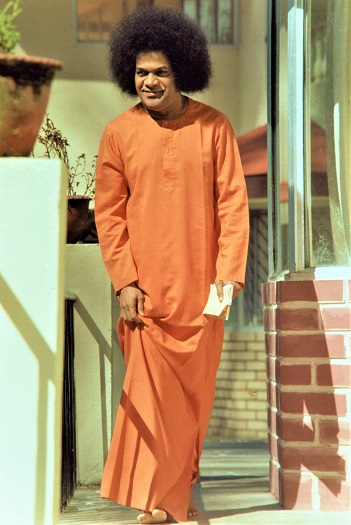
Sri Sathya Sai Darshan at Kodaikanal
A few years ago Baba asked me to talk to the students at His bungalow in Kodaikanal. “Oh-oh, I’m in trouble,” I said to myself as I entered the neat parlor of Swami’s bungalow and made my way through the group of students to His chair. He motioned me to take Padanamaskar and softly said,”Talk about Dharmic Management.”

I stood to one side, looked at the students, uttered a quick “0m Sai Ram” under my breath, and began. “Bhagavan directed me to write a book on Dharmic Management,” I said. “At first, I thought writing it would be a simple task because I have over thirty years experience as a management consultant in ‘organization transformation’—which is the infusion of new energy, heart, and spirit into human organizations. But when I dove into the vast idea of Dharma I found myself occupied not only with the knotty problems of people in modern organizations but in the most profound spiritual questions and moral dilemmas facing people down through the ages.  

This is beyond my capacity, I thought, but Baba, as though reading my mind, called me to Him and reassured me, ‘You have everything you need to write this book. I will help you.’ And later He told me, ‘Don’t worry whether your writing fits with My teachings. Write from the heart; your inner voice is Me.’ Even with those calming words I found myself constantly turning inward to call on Baba for help.”

“Not only was I trying to deal with some of the most profound queries of mankind (basic questions of values, purpose, spirit, and happiness),” I continued, “but I knew that most prospective readers would not be Sai devotees or even spiritual people. To grab and hold their interest the book had to respond to their problems and concerns. So I began to look closely at the eight or nine issues of most concern to management people (profitability, marketing, finance, motivation, and so forth) intending to answer those questions from a human values and spiritual perspective.”

“Over the following months, as I delved into these diverse questions, the answers began to sound strangely alike. My local mind rebelled, ‘How can answers to such dissimilar questions be so similar?’ I returned to the issues and dived even further into each, as though spiraling deeper and deeper, eventually into the very centre of them. When I reached this core level I found that the answers were not merely similar, they were exactly the same. Each of these issues required precisely the same remedy.  At this profound level there is but one answer for all these questions!” 

The boys were leaning forward not to miss this curious answer, ‘And that one solution can be summarized in one word,” I said. They leaned closer, ‘And that one word is … Love.”

“Yesss!” Baba immediately chimed in, startling everybody. All the boys’ heads snapped at once toward their beloved Bhagavan. Baba then spoke three words, nodding slightly to lend emphasis to each word. “Love ... is ... God:’ He said, and sat back.
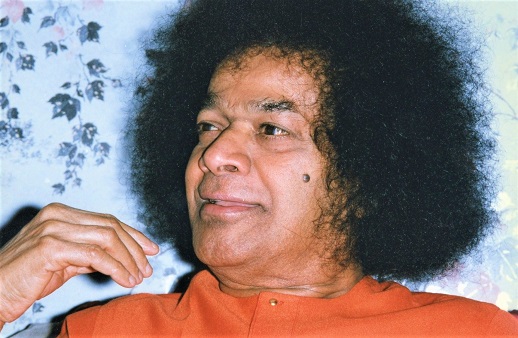
Sri Sathya Sai at the Sai Sruthi Mandir Kodaikanal
As so often happens with our Bhagavan, all the pieces suddenly fell into place and made perfect sense. We’ve heard Him say it many times, but in that setting it came to life and became real. Suddenly –the Great Truth is our Truth too: when we finally arrive at the very deepest (or highest) level of any issue the answer is always Love.

This essential spiritual Truth sounds perfectly local in that sacred environment there on the mountain top in the presence of the Avatar of this age. But what happens when one comes down from the cool freshness of that place to the heat of the so-called real world of business? It seems a long, long way from up there to down here in most organizations that I work with.

After returning to the USA, I found myself in the board room of a new client company talking to the top management team about “personality patterns” that develop in organizations. It was an interesting company, founded by a goodhearted Hollywood movie star to create jobs for needy people from the ghettos and barrios of Los Angeles. But the company was in a hard-fought, competitive, industry, and had found itself in business trouble. Reacting to the trouble, the company was beginning to tighten up and thus lose its kindness, which was its soul. I was standing at the front of the room reaching to make a point.

I drew a horizontal line on the chalkboard, planning to use it to show a range of behaviors toward employees. “To help us understand an organization’s basic ‘personality,’ let’s use a reverence continuum,” I said. I was a little surprised when the word reverence popped out of me and noticed several brows wrinkling and some quizzical looks. “Oh-oh, I’m in trouble,” I said to myself again, and breathed an ‘0m Sai Ram.’

But I had seen those kinds of brows before and, believing that my little prayer would work, I trusted that this session would turn out okay. So I moved ahead, explaining that an organization’s characteristic pattern of behavior could be plotted somewhere along this chalk line, depending on the quality of human relationships within the organization.

Then I drew two short vertical strokes about a third of the way along the line. “This represents the dividing plane between basically ‘uncivilized’ and basically ‘civilized’ organizations. To the left of this plane are the mean spirited, indifferent, and apathetic organizations. Unfortunately, there are too many of them nowadays. Disregard those bad companies for now” I X’d that segment. “Let’s only consider companies to the right of the plane, organizations that are basically civil.”

I then divided this civilized portion of the line into four segments. “There are gradations of civility,” I said, pointing to the first segment. “The most elementary ‘civilized’ organization personality is the Polite organization.” I labeled the segment P.

“People in these Polite companies,” I continued, “are at least minimally considerate of and attentive toward one another. These are organizations with ‘manners;’ there’s a whiff of common courtesy in the air of them.” I searched my mind for an example. “The English as a nation are generally good at this. Even if they don’t like you, they will at least act politely toward you most of the time. It may be rather thinly veiled, but they seldom let themselves dip below a basic minimum level of civility.”

“But these Polite organizations better be careful,” I said half-jokingly, “because if they persist in this politeness it will grow, and they will slip over the line into real Caring. I scratched a C in the next segment of the continuum.

“The Caring organization is the Polite organization, but even more so. In the Caring organization members are more attentive, more thoughtful and more interested in people — and they’re more concerned about the company and the quality of their product. In this organization you see them watching out for one another and for customers.”

I gave an example, an incident in a particular high-production pharmacy unit in a huge medical center. “The unit operates as a human prescription-filling machine,” I said. “You walk into that workplace and all heads are down, churning out thousands upon thousands of medical “scrips” under great pressure each day. There’s a whole squad of professional pharmacists behind a long glass partition busily filling prescriptions, and there’s a score of clerks working the front end of this huge human apparatus, pecking at computer terminals and dealing with the throngs of patients that constantly stream up to the many windows at a very long counter. One day an old man shuffled slowly up to one of the windows and asked in a weak, shaky voice for diabetes medicine. Every head in the unit, whether pharmacist or clerk, looked up to make sure the patient wasn’t ‘in trouble.”
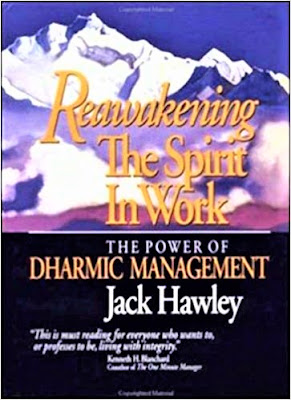
The Book on 

Dharmic Management
With this example the wrinkled brows in the group smoothed out some as these ideas were beginning to make sense. I continued, feeling a bit lighter, “But even Caring organizations better watch out because those behaviors, too, become a habit. If they aren’t careful, their caring expands into respect.” I labeled the third segment R.

“Respect! Imagine an organization culture (or a society) saturated in respect. Respect is one of those qualities we all know when we feel it, and are especially aware of when it’s missing. And yet, basic human respect is not thought about or talked about much in the business environment.” 

I then asked, “What are the important human interactions and feelings that make up a respectful organization?” ‘The group helped build a list: being considerate toward one another, holding others in esteem, admiration, kindness, and so forth. It was a good list. “That’s the kind of organization I hear people all over yearning for,” I said. Their body language told me they agreed.

Dr. Jack Hawley


https://sathyasaiwithstudents.blogspot.com/2018/08/from-mountain-top-to-board-room-by-dr.html#.W4jUQSQzbIU 
Turning to the chalkboard I put a big R in the final segment of the continuum. Remembering the strange word reverence they realized where I was headed and shifted uncomfortably in their seats. I pushed on anyway, “And respectful organizations should really be careful because when an organization constantly practices respect it becomes a habit—and that habit eventually deepens into Reverence.”

Бог был бы очень жестоким, если бы этот мир был реальным...

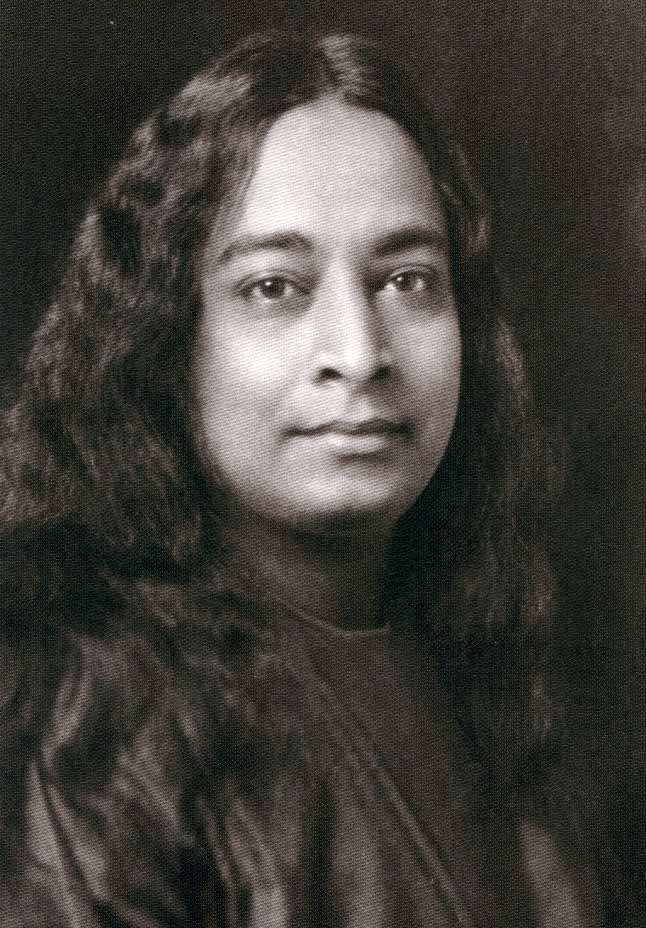
Парамаханса Йогананда о РОЖДЕСТВЕ 

Миллионы людей празднуют рождественские праздники как обычный светский праздник. И лишь немногие из них понимают, что Рождество - это время, когда душа вспоминает о рождении Христа, и обмениваются вечно сущими дарами с сердцем человеческим.
Во время предрождественской суеты ваше общество забывает о том, кто такой Иисус Христос, а ведь Он - это вечносущая, личнорадостная реальность в яслях божественного экстаза. Приготовьтесь же отпраздновать Рождество истинно, так, как это будет описано чуть ниже.
- Настройте ваши сердца так, чтобы найти в душе истинные слова и сказать их тому, кому ежедневно креститесь: " Отче, научи меня любить моих заблудших братьев, ибо не ведают они, что творят ныне. Позволь мне взрастить любовь мою, как драгоценный цветок, помоги не погубить ее безрадостному злу."
- Принесите ваши сердца на алтарь любви Христовой, что сохранилась еще во всех человеческих расах и народах. Любите все народы, без исключения, как место обитания вечно и всесущего Христа.
- Простите все вашим мнимым и вполне реальным врагам, как прощал Христос Своим неприятелям.
- Любите Иисуса Христа как радость глубочайшей медитации, и тогда вы сможете ежедневно служить мессу грядущему воскресению Христа и духовному Рождеству вашей бессмертной души.
- Откройте в себе потаенного Иисуса Христа, и вы увидите, как родится Он на свет вторично.
- Меряйте все поступки вашей жизни мерилом справедливости и бесстрашия Христа.
- Преодолевайте искушения чувств, приносящие страдания, и вы почувствуете истинный вкус добра. Откажитесь от преходящих мирских радостей и начните поиск вечной и истинной радости души.
- Узрите всесущую радость Христа во всех святых, во всех людях, во всех созданиях, в усеянном звездами космосе и в храме ваших собственных мыслей.
- Не забывайте, что Христос может родиться вновь в любую из рождественских ночей, в любое другое время, родиться в вашем обновленном сознании.
- Даруйте добро злу, понимание - непониманию, доброту - недоброжелательности, мир - вражде, покой - беспокойству и вечное блаженство - преходящим плотским радостям и утехам.
- Всмотритесь во всесущего, вечно живого Иисуса Христа - вновь рожденного вашей верой.
- В Рождество Христос повсюду - в красоте природы, в вашей очнувшейся ото сна мудрости, во всем, скрывающем истинно прекрасное, и в каждом, кто пропитан истиной бытия Христова.
- Обменивайтесь духовными подарками с другими людьми.
- Одарите других людей мыслями о Христе, а также теми мыслями, которыми вы дарите Его в вашем сердце. Примите Его собственные дары под рождественским древом вашего сознания, богато украшенным и мерцающим огнями всех тех, кого узнали вы и полюбили. Позвольте вашей радости танцевать на далеких планетах, в далях голубых небес и на волнах любви. Это и будет ваш настоящий и истинный праздник Рождества.

Парамаханса Йогананда


 Саи Рам! 
у Йогананды есть просто очень совпадающие со Свами  мысли  об Иисусе
вспомнилась сейчас ещё одна его мысль о Христе
выкладывала её почти 7 лет назад в теме :clover:  "Крест как Путь"     

это отрывок из книги Парамахамсы Йогананды "Автобиография Йога"

Йогананда пишет :

"Никогда более ни на Востоке, ни на Западе не слышал я, чтобы кто-нибудь изъяснял христианские Писания со столь глубоким духовным прозрением, как Шри Юктешвар. 

"Теологи неверно истолковывали слова Христа, - говорил учитель, - в таких местах, как "... Я есмь путь и истина и жизнь; никто не приходит к Отцу, как только через Меня". - От Иоанна 14.6. Иисус никогда не подразумевал, что Он один Сын Божий... 
... этими глубокими словами Он выражал то, что никто не может достичь бескачественного Абсолюта, трансцендентного Отца, Который за творением, пока не проявил в себе "Сына", или вездесущее Сознание Христа внутри творения. Иисус, который достиг полного единства с этим Сознанием Христа, отождествлял Себя с Ним, так как Его собственное эго давно растворилось".


:clover:

никто не может достичь бескачественного Абсолюта, трансцендентного Отца, Который за творением, пока не проявил в себе "Сына" или вездесущее Сознание Христа внутри творения ... 
 "Взгляд добровольного аналитика, желающего проникнуть в жизнь другого человека, обычно туманят жертвы человеческих ошибок. Поэтому, прежде чем насаждать мудрость в сердцах людей, аналитику следует самому исполниться мудрости. Критический анализ своих ближних, представляющий собой критиканство души, - это садизм. Тот, кто практикует его, пытается на самом деле спрятать под вуалью критических издевательств собственные ошибки.
Иисус говорил:"Не судите, да не судимы будете (Матф. 7:1). Смиренно советую я вам:"Не критикуй никого, если только он сам не попросил тебя об этом".
Критиковать других - уже дурно, оповещать же публику о совершенных человеком ошибках - вообще грех по отношению к Господу, который и так мечется в храме души несчастного. Не стоит посыпать солью нежелательной критики душевные раны человека. Не лучше ли смазать их целебным бальзамом по-настоящему дружеского совета? Дабы не стать ассенизаторами человеческих душ, поменьше вглядывайтесь в клоаку грехов и сточные воды недостатков и почаще - в цветущие сады положительных качеств!"

Из книги П. Йогананды "Жизнь по ту сторону преображения"
Саи Рам
  В 01.09.2018 в 02:44, Елена Волкова сказал:
Не стоит посыпать солью нежелательной критики душевные раны человека. Не лучше ли смазать их целебным бальзамом по-настоящему дружеского совета?
Как здорово. А ведь куда проще?
********
Из любимого из Йогананды у меня:

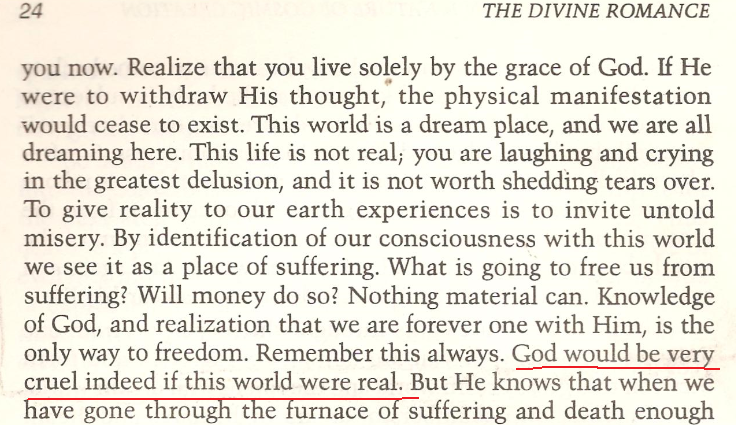
Бог был бы очень жестоким,
если бы этот мир был реальным...
(из книги "Божественный романс")

йогананда.png

Парти Ятра преданных из Вишакхапатнама

2 сентября 2018, воскресенье
Парти Ятра преданных из Вишакхапатнама

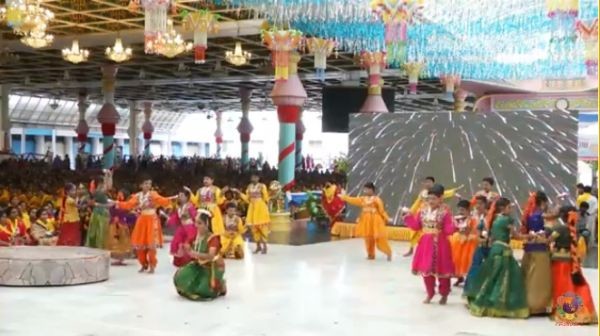
Этим вечером в канун Шри Кришна Джанмаштами паломники, молодёжь и учащиеся Балвикас из района Вишакхапатнам Андхра Прадеш, представили в Прашанти Нилаям музыкальный танцевальный спектакль, называвшийся «Сур Сагар», посвящённый жизни наиболее прославленного преданного Кришны – Сурдаса. Этот спектакль с красивыми песнями и танцами, исполненный с огромным пылом преданности, стал преддверием празднования благоприятного явления Бхагавана Шри Кришны, начало которого выпадает на сегодняшнюю полночь и состоится через несколько часов.  
2092018-1.jpg.bd18af617c18d345481e6288a371613d.jpg
Ранее, начиная вечернюю программу, президент Шри Сатья Саи Сева организации Вишакхапатнама, говоря на языке телугу, представил отчёт о деятельности служения в районе.  
Начавшиеся после спектакля бхаджаны завершились предложением Мангала арати Бхагавану.
Фото – скрин с видео.
Видео спектакля преданных из Вишакхапатнама, представленного в Прашанти Нилаям 2 сентября 2018


рассказы о Саи и Его участии в наших жизнях всегда очень вдохновляющи и поучительны

Рассказы о Саи и Его участии в наших жизнях всегда очень вдохновляющи и поучительны, хочется поделится некоторыми, которые были услышаны на конференциях и собраниях Саи преданных Литвы, Латвии и Эстонии и особенно запали в душу
может быть, у кого-то тоже будет, чем поделиться в этой теме, тогда добро пожаловать!
:clover:
Один последователь Бхагавана поступил на работу. И через некоторое время столкнулся там с нечестностью и воровством. Он был очень расстроен такими обстоятельствами, и не мог понять, как можно любить таких людей. И однажды он спросил Свами об этом:
- Свами, как можно любить людей, которые воруют и живут за счёт других?
Свами посмотрел на него и спросил:
- Как ты думаешь, кто создал этот мир?
- Ты, Свами .., - ответил задавший вопрос.
- Нет, - сказал Бхагаван, - Я его не создал - Я ИМ СТАЛ
марианна форум Сатья Саи ру

1451434_281750328682309_4777465510254932153_n.jpg

пятница, 31 августа 2018 г.

Новости из Ашрама

26 августа 2018, воскресенье
Парти Ятра преданных из Ориши в Прашанти Нилаям, день 1

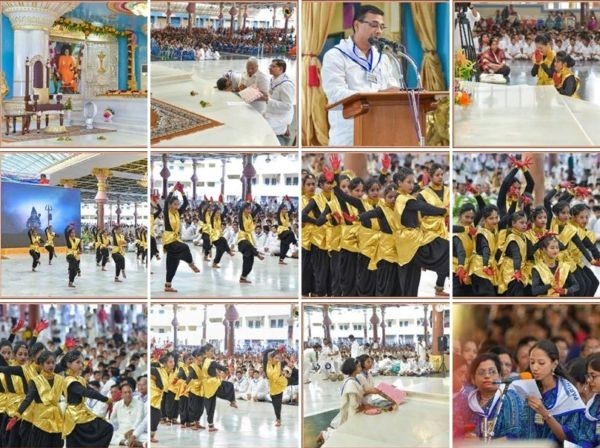
Этим вечером в Прашанти Нилаям паломники из штата Ориша представили культурную программу. Преданные из штата Ориша находятся в Прашанти Нилаям в 3-дневном паломничестве, в нём принимают участие много преданных, включая женщин и детей. Начиная программу в 17:00, Шри Нараян Сар, президент Шри Сатья Саи Сева организации (SSSSO) штата Ориша, представил отчёт о деятельности организации за последние несколько лет. Выразив обильную благодарность Лотосным Стопам Бхагавана за Его высшие щедроты непрекращающейся Божественной милости, президент организации штата Ориша выразил солидарность со штатом Керала, который восстанавливается после опустошительного наводнения, происходящего последние две недели.  
Первым номером программы этого вечера был танец Шива Тандава в исполнении учениц Шри Сатья Саи Видья Мандира Бхаванипатна. Эта форма танца изначально приписывалась Раване, который в момент сильного страдания начал петь песнопение Шива Тандава, умилостивляя Бога, завоевав Его обильную милость.
Затем расцветающие таланты из Балвикас Симфонии штата Ориша представили программу духовных песнопений, исполняя их с большим пылом преданности. Первое песнопение «Джаганнатха Кичхи Магу Нахи Тоте…», исполненное соло, было посвящено главному божеству Ориши Господу Джаганнатху из известного храма Джаганнатх Пури, и последовавшее за ним песнопение «Намасте Прабху Джаганнатха…» тоже исполнялось соло. После этого прозвучало ещё два песнопения: «Дживан Тумне Дийя Хей Самбхалоге Тум…» и «Према Джйоти Джале Ре…», они были исполнены хором. Группа хористов продолжила программу быстрым исполнением попурри из бхаджанов.  
Вечерняя программа продолжилась бхаджанами в исполнении певцов из группы Саи Симфония, которые завершились особым воскресным бхаджаном, исполненным Бхагаваном. Мангала арати, предложенное Бхагавану, завершило программу этого вечера.
Источник текста – фотоальбом Радио Саи 
Радио Саи поместило фотоальбом культурной программы преданных из Ориши, представленной в Саи Кульвант холле Прашанти Нилаям 26 августа 2018
26082018-1.jpg.bc6ad1205c9a268d402ecbb48172bd37.jpg
Видео культурной программы преданных из Ориши, представленной в Прашанти Нилаям 26 августа 2018

======================================
27 августа 2018 смотрите прямую трансляцию культурной программы преданных из Ориши, день 2. Трансляция начнётся примерно в 5 часов вечера по индийскому времени (в 14:30 по московскому) на сайте Радио Саи http://media.radiosai.org/www/


27 августа 2018, понедельник
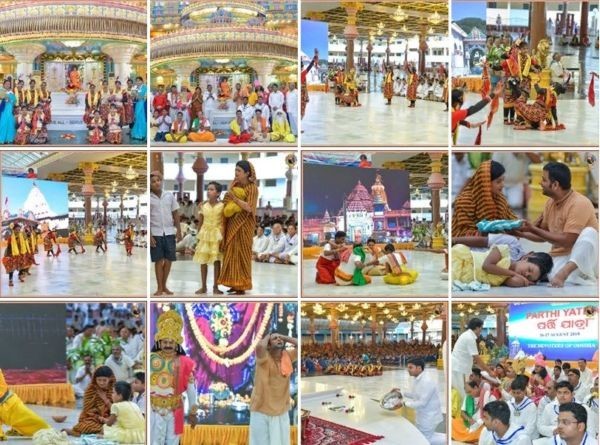
Парти Ятра в Прашанти Нилаям преданных из Ориши – день 2
Вдохновляющая история о Сакхья Бхакти из Джаганнатх Пури… История о Бандху Моханти… Этим вечером, в 3-й, последний день Парти Ятры преданных из Ориши, молодёжь Саи из штата Ориша представила прекрасный спектакль, повествовавший об одном из выдающихся преданных Господа из Джаганнатха Пури – Бандху Моханти.
Программа этого вечера началась народным танцем в исполнении учениц Шри Сатья Саи Видья Мандира Бхаванипатны, посвящённым Богине Самалешвари, Богине Самбалпура. Напоминая одну из эпохальных историй Сакхья Бхакти из жизни Бхагавана Шри Кришны, связанную с Судамой, этот вечерний спектакль о Бандху Моханти повествовал о неподражаемых Божественных способах Всевышнего, которыми Он протягивает руку Своим беспомощным преданным.  
Бандху Моханти, родом из Джаджпура в Ориши, страдающий от крайней нищеты, отправился в паломничество в Джаганнатх Пури как в своё последнее прибежище, чтобы встретиться со своим другом, Самим Господом, чтобы облегчить свою проблему, трудную проблему содержания семьи, состоящей из четырёх человек. У преданной семьи, остановленной у ворот грубыми оскорбительными словами, не осталось другого выбора, кроме как искать прибежища у Матери Земли, ложась спать на землю с почти пустыми желудками. Для того, кто называет Его своим Бандху, не должно быть никаких проблем. В тишине ночи Он Сам пришёл в другом образе, принеся золотое блюдо, наполненное деликатесами, накормив Своего «бандху» Собственными Руками.
Невинное сердце Моханти в напряжённое для него время смогло распознать Его непосредственное Присутствие, но преисполнилось благоговейного трепета от удивительных событий, происходивших ночью. Позднее, когда обнаружилась пропажа золотого блюда, официальные власти храма забрали его, обвинив Моханти в краже. Никакие искренние мольбы не помогли, и его увели. Теперь пришлось вмешаться Самому Господу. Он пришёл в сон царя, велел освободить Своего друга и привести его в храм, поскольку он Его Бандху, Бандху Моханти.  
Великолепный спектакль с проникновенными песнями и игрой актёров затронул сердца многих незнакомой историей из Ориши, представив ещё одного невоспетого героя, живущего в сердце Бога.
Начавшиеся после спектакля бхаджаны в исполнении группы Саи Симфония завершились предложением Мангала арати Бхагавану.
Самаста Лока Сукхино Бхаванту – да будут счастливы все существа во всех мирах!
Источник текста – фотоальбом Радио Саи 
Радио Саи поместило фотоальбом культурной программы преданных из штата Ориша (день 2), представленной в Прашанти Нилаям 27 августа 2018.
27082018-1.jpg.f3ec2093f2053001c1e6f5d232ebc831.jpg
Видео культурной программы преданных из штата Ориша (день 2), представленной в Прашанти Нилаям 27 августа 2018